SPHERE(S) Mile End / With Ukraine: Shifting Spheres and Returns takes the Mile End neighbourhood as its point of departure, exploring the shared histories of Ukrainian communities and diasporas across Quebec and Canada. In the spirit of SPHERE(S)—a new type of international contemporary art event—this “test sphere” highlights the enduring role of migration as a source of cultural, social, and human transformation, while examining the challenges of coexistence, both past and present, within our societies.
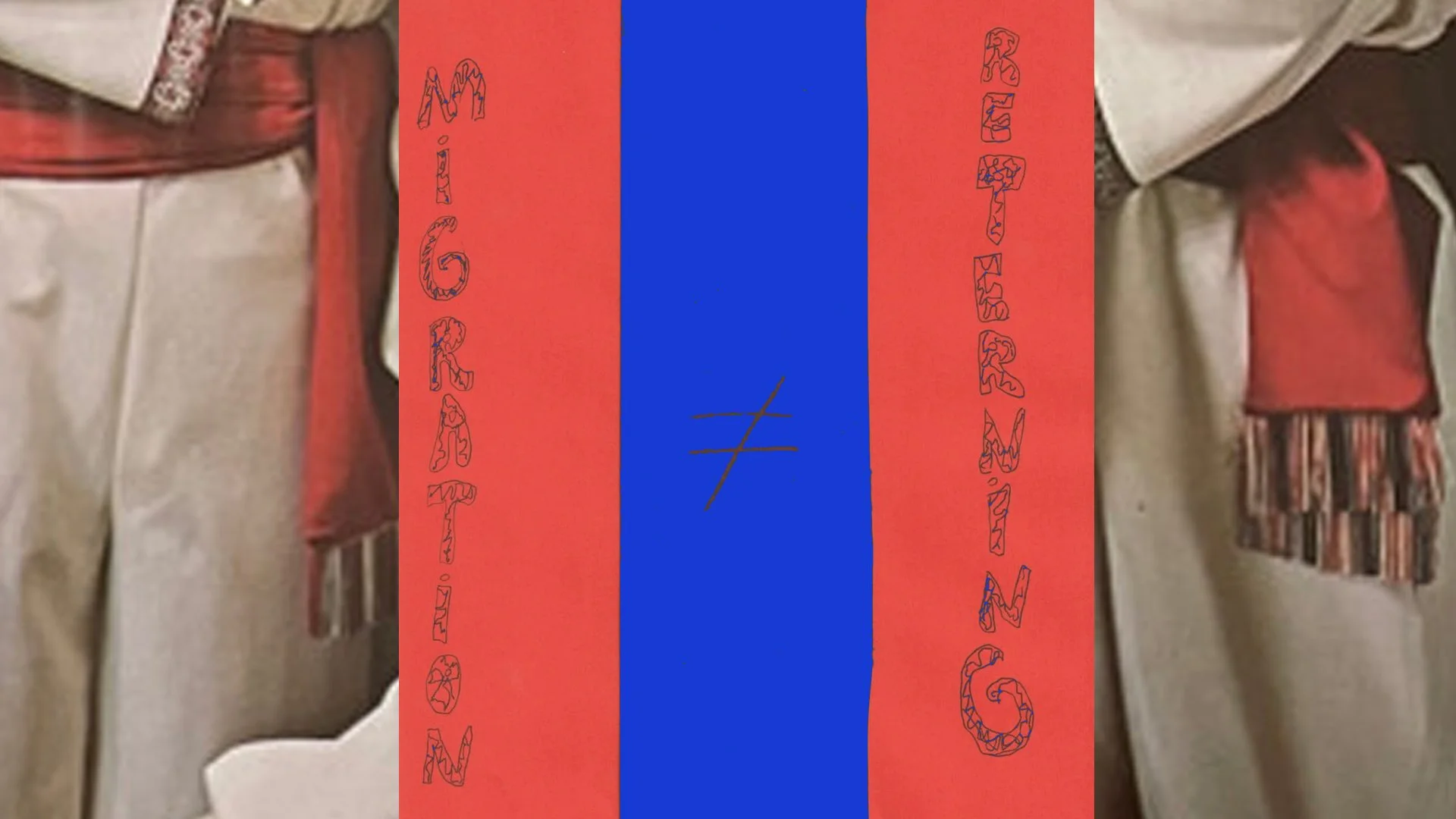
Ні долі, ні волі у мене нема, Зосталася тільки надія одна: Надія вернутись ще раз на Вкраїну, Поглянути ще раз на рідну країну, Поглянути ще раз на синій Дніпро, – Там жити чи вмерти, мені все одно; Поглянути ще раз на степ, могилки, Востаннє згадати палкії гадки… Ні долі, ні волі у мене нема, Зосталася тільки надія одна.
Ні долі, ні волі у мене нема, Зосталася тільки надія одна: Надія вернутись ще раз на Вкраїну, Поглянути ще раз на рідну країну, Поглянути ще раз на синій Дніпро, – Там жити чи вмерти, мені все одно; Поглянути ще раз на степ, могилки, Востаннє згадати палкії гадки… Ні долі, ні волі у мене нема, Зосталася тільки надія одна.

Shifting Spheres and Returns invites reflection on a world undergoing profound transformation—marked by violent conflict and upheaval that challenge established orders and reshape dominant narratives. In certain contexts, these changes generate dynamics of withdrawal and fragmentation, while simultaneously producing powerful resonances across diasporic communities worldwide. They also create opportunities to revisit overlooked histories and marginalized cultural practices, and to imagine forms of solidarity that extend across space and time.
Through art, this inquiry addresses the socio-political conditions that make migratory trajectories and the emergence of diasporas possible—or necessary. We trace these paths while inventing new ones. Audiences are invited to discover a series of artistic interventions, conversations, workshops, and guided tours.
Shifting Spheres and Returns unfolds through a series of artistic interventions conceived by Nikolay Karabinovych, Adam Kinner, Eugénia Reznik and Alex Reznik, and Alisi Telengut, and includes the reactivation of a historical work by Michael Snow. SPHERE(S) Mile End / With Ukraine highlights the enduring role of migration as a source of cultural, social, and human richness, while engaging questions of coexistence, both historical and contemporary, within Canadian society. The project is developed through contributions from communities in Tiohtiá:ke / Montreal, Western Canada, fragmented diasporas, and people engaged in forms of transnational Indigeneity.
The question of “return” occupies a central place—not as a predetermined framework, but as the outcome of exchanges carried out over two years with artists, scholars, journalists, and participants from diverse backgrounds. These exchanges explore returns of memory, possible reactivations of ancestral practices, the real or symbolic pathways that enable or obstruct them, the structures shaping such processes, and even the very possibility of returning to a place called “home.”
The project situates these trajectories within an expanded historical and territorial framework by examining the place of migration within Canada’s project of expansion over time. Particular attention is given to the intersections of migration, displacement, memory, and colonial history. Through this lens, SPHERE(S) opens a space for reflection on forms of belonging, solidarity, and responsibility in contemporary societies.
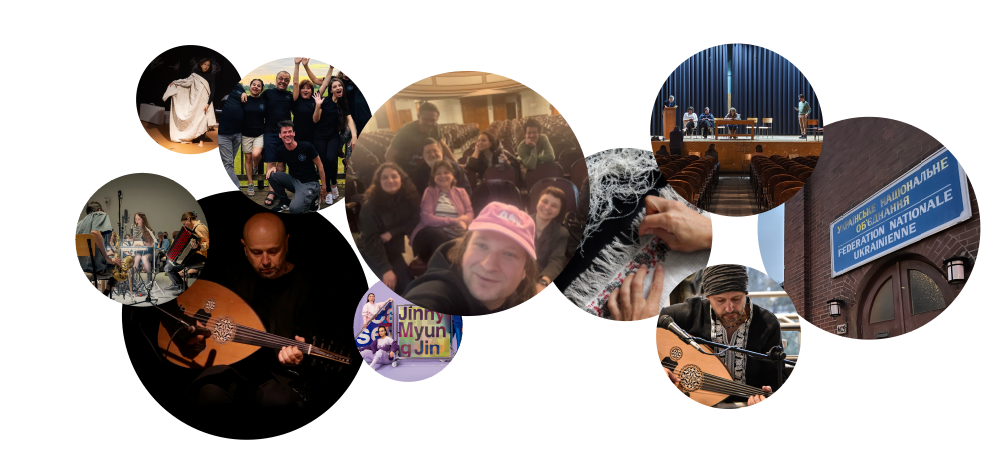
IMAGES → Selfie from Nikolay Karabinovych’s first meeting with the Stozhary Theater (center), Eugénia Reznik, group photo of the Stozhary Theater, Adam Kinnner, Eugénia and Alex Reznik (Sumish), Jacqueline Hoàng Nguyễn (right), Eugenia Reznik, theater and facade of the Ukrainian National Federation of Quebec (photo: Anna Kovalenko), Alex Reznik.
Artistic Director_SPHERE(S) Mile End / With Ukraine: Chantal Pontbriand
Curator_SPHERE(S) Mile End / With Ukraine: Shifting Spheres and Returns: Sasha Baydal
Coordination: Ania Morochnik, Anna Kovalenko
Artists: Nikolay Karabinovych, Adam Kinner, Eugénia Reznik and Alex Reznik, Michael Snow, Alisi Telengut
With contributions from: Dominique Arel (University of Ottawa), Jen Budney (Ukrainian Museum of Canada, Saskatoon), Céline Galipeau (Radio-Canada, Tiohtiá:ke / Montreal), filmmaker Jonathan Durand (Tiohtiá:ke / Montreal), Vincent E. (Queen’s University, Kingston), David Garneau (University of Regina), Daria Hetmanova (Simon Fraser University, Vancouver), artist Jacqueline Hoàng Nguyễn (Ho Chi Minh City, Vietnam), Mélanie Leavitt (Mile End Historical Society, Tiohtiá:ke / Montreal), Galyna Lykhoshva (Tiohtiá:ke / Montreal), Dominic Marion (Université de Montréal), artist Anoush Moazzini (Tiohtiá:ke / Montreal), writer and curator James Oscar (Tiohtiá:ke / Montreal), Alexandra Tsay (Concordia University, Tiohtiá:ke / Montreal), artist Alisi Telengut (Tiohtiá:ke / Montreal), and Lidia Zhigunova (Tulane University, New Orleans, USA).
Venues: PHI, Ukrainian National Federation of Quebec, Fonderie Darling, and the Mile End and Rosemont neighbourhoods of Tiohtiá:ke / Montreal.
The project is supported by the Canada Council for the Arts, the Conseil des arts et des lettres du Québec, and the Consulate General of France in Quebec City.
In partnership with the Ukrainian National Federation of Quebec, PHI, I’MMIGRANT, and Fonderie Darling.
Program Highlights
〰️
Program Highlights 〰️
JUNE 6, 2026 | 1:30 PM – 7:00 PM
SPHERE(S) WITH UKRAINE OPENING DAY AT PHI
SPHERE(S) Lab discussion sessions and a performance by Eugénia and Alex Reznik
PHI Foundation, Space 4
407 Saint-Pierre Street, Tiohtiá:ke / Montreal
JUNE 7, 2026 | 12:00 PM – 1:30 PM
GUIDED TOUR OF UKRAINIAN ROSEMONT WITH GALYNA LYKHOSHVA
“Ukrainian Montreal” Guided Tour, Part I
Meeting point: Ukraine Park
Rue de Bellechasse, Tiohtiá:ke / Montreal
JUNE 12, 2026 | 7:30 PM – 9:30 PM
PERFORMANCE EVENING IN MILE END
Featuring Nikolay Karabinovych, the Stozhary Theatre, Adam Kinner and ensemble: Philippe Lauzier, Frédérique Roy, Stefan Schneider, and Eliana Zimmerman
Doors open at 7:00 PM
Ukrainian National Federation of Quebec
405 Fairmount Avenue West, Tiohtiá:ke / Montreal
JUNE 13, 2026 | 1:30 PM – 7:00 PM
SPHERE(S) WITH UKRAINE AT PHI – DAY TWO
SPHERE(S) Lab discussion sessions, a screening of a film by Alisi Telengut, and an Adam Kinner workshop centred on Michael Snow’s work SINOMS
PHI Foundation, Space 4
407 Saint-Pierre Street, Tiohtiá:ke / Montreal
JUNE 14, 2026 | 11:30 AM – 1:30 PM
GUIDED TOUR OF UKRAINIAN MILE END WITH GALYNA LYKHOSHVA
“Ukrainian Montreal” Guided Tour, Part II
Meeting point: Ukrainian National Federation of Quebec
405 Fairmount Avenue West, Tiohtiá:ke / Montreal
JUNE 14, 2026 | 1:30 PM – 5:00 PM
SPHERE(S) CHORUS : CLOSING EVENT
Post-event collective discussion, excerpts from performances, a convivial reception with refreshments and light bites
An informal gathering bringing together artists, SPHERE(S) Lab participants, organizers, members of the Ukrainian community, and attending audiences.
Ukrainian National Federation of Quebec
405 Fairmount Avenue West, Tiohtiá:ke / Montreal
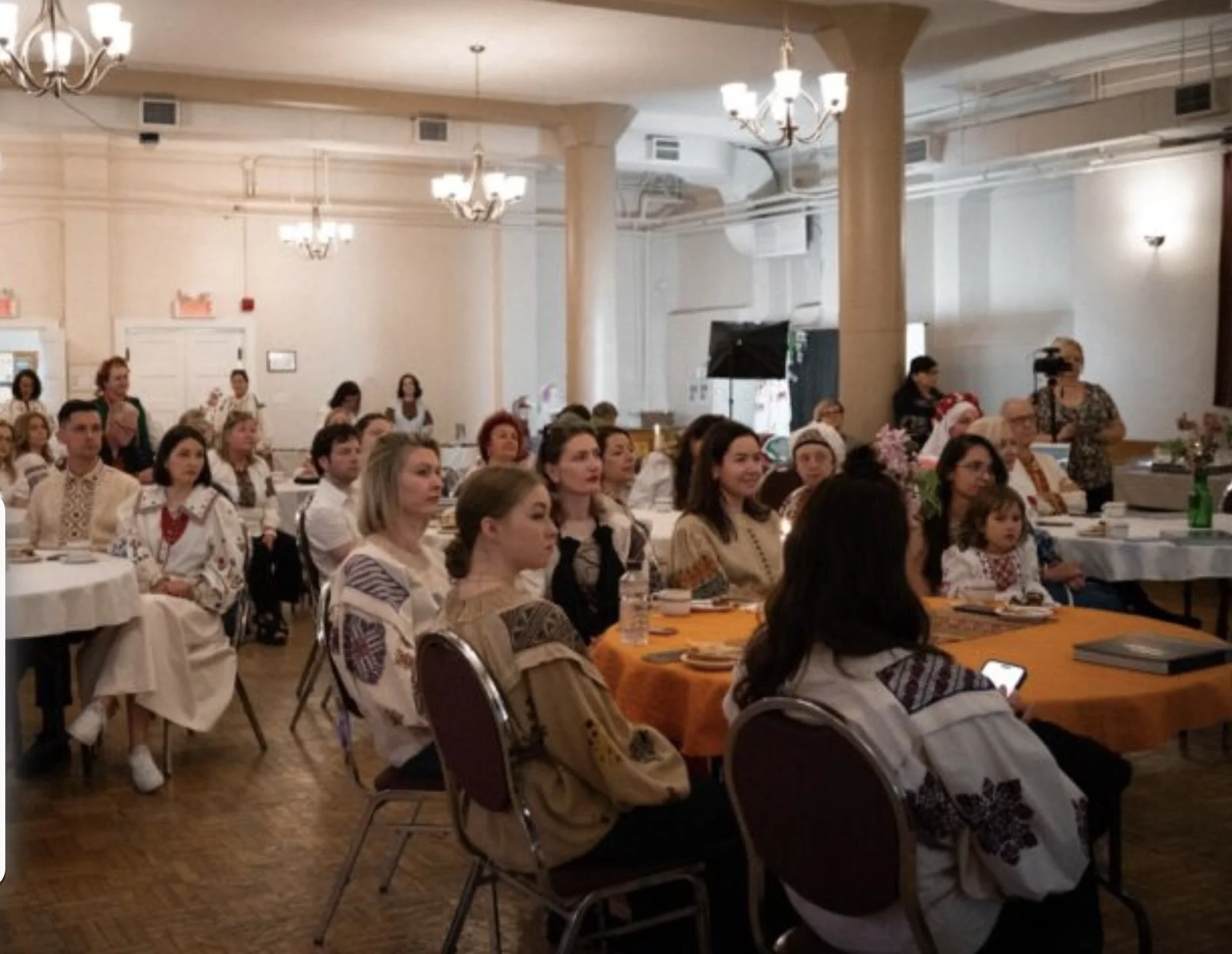
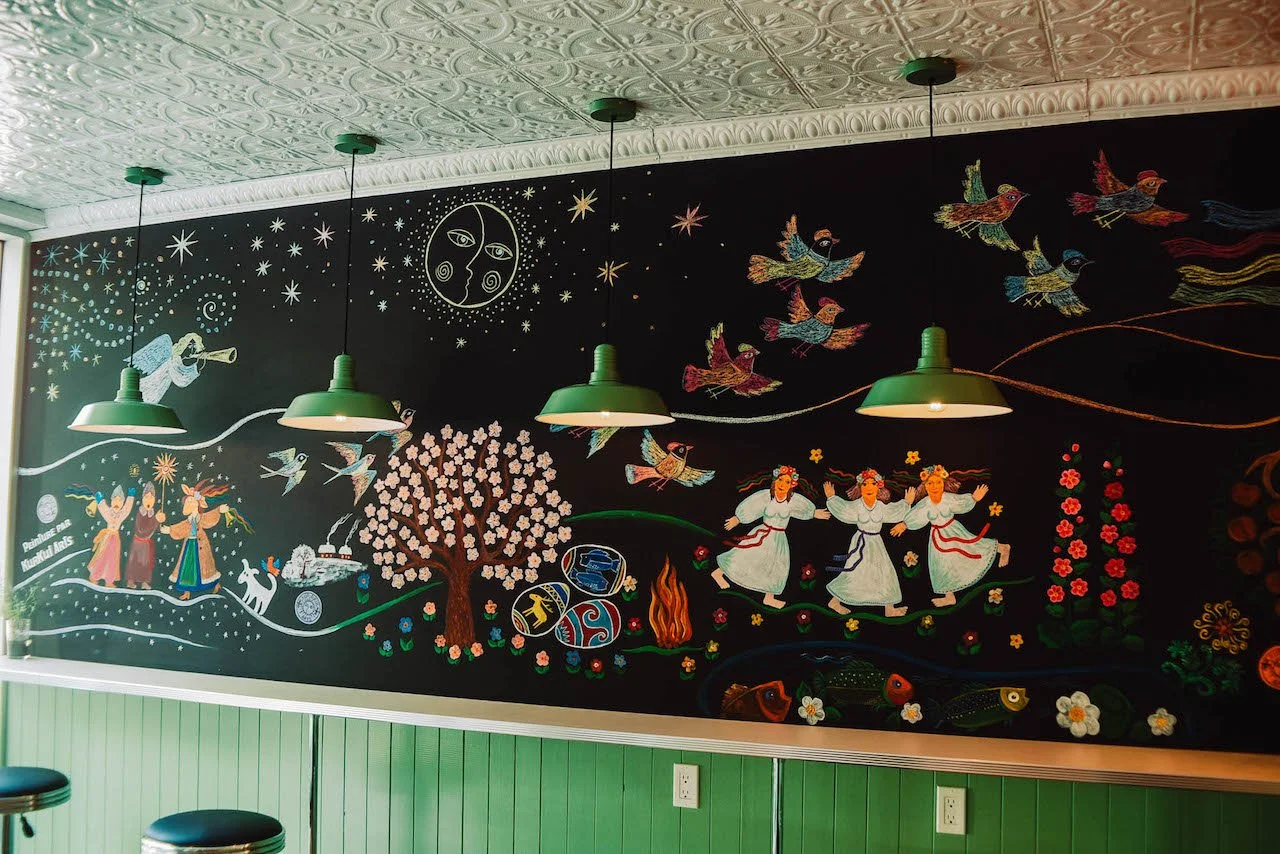
→Celebrate in the main hall of the Ukrainian National Federation! Courtesy of the Federation.
We would like to sincerely thank all our collaborators since the inception of SPHERE(S) in 2017, the participants in the Working Group (2018–2019), and all members of the SPHERE (S) Lab created in 2021 (of which this project is an initial initiative, in addition to La Cancha, focused on Guatemala’s presence in Canada, carried out in 2022–23), as well as the members of the Board of Directors of SPHERES Art Contemporain International, established in 2022.
Chantal Pontbriand and Sasha Baydal would like to thank everyone they have met since the fall of 2024 for helping to carry out the investigation and research necessary to bring this new test sphere on Ukraine's presence in Canada to fruition.
BOARD OF DIRECTORS_ SPHERE(S)
Mathieu Bouchard, President
Chantal Pontbriand, Vice President
Angela Grauerholz
Trevor Gould
Hubert Marsolais (former member)
SPHERE(S) Lab
Romeo Gongora
Caroline Monnet
James Oscar
Chantal Pontbriand
Cheryl Sim
Colas Wohlfahrt
Ronald Rose Antoinette (former member)
Detailed Program
〰️
Detailed Program 〰️
-
SPHERE(S) Lab discussion sessions
and Wrapping in the Sound of Fringes, a performance by Eugénia Reznik and Alex Reznik
PHI Foundation, Space 4
407 Saint-Pierre Street, Tiohtiá:ke / MontrealSPHERE(S) Mile End / With Ukraine: Shifting Spheres and Returns will open at PHI in Old Montreal. The day of June 6 will begin with an introduction to SPHERE(S) by Chantal Pontbriand and Sasha Baydal, followed by two SPHERE(S) Lab discussion sessions in an agora-style format conceived as a space for exchange, and a performance by Eugénia Reznik and Alex Reznik created specifically for the occasion. An open bar will conclude the day.
In addition to the participating artists, the SPHERE(S) Labs will bring together researchers and knowledge holders from Quebec, across Canada, and internationally around two thematic areas of reflection.
1:30 pm Welcome : Chantal Pontbriand and Sasha Baydal
1:45 pm Prelude : Dominique Arel will provide historical and contemporary context for the Ukrainian question.
2:15 pm Laboratory I : Here and Elsewhere: Rooting in Motion – Diasporic Resilience and Sustaining “Home” in Exile
This discussion invites participants to consider diaspora beyond the lens of uprootedness—as a dynamic way of inhabiting the world.
With: Sasha Baydal, Nikolay Karabinovych, Mélanie Leavitt, Galyna Lykhoshva, Anoush Moazzini, Chantal Pontbriand, and Lidia Zhigunova
3:30 pm Break
4:00 pm Laboratory II : What Is the Cost of Taking Root in Another’s Garden? Entanglements: Migration, Multiculturalism, and Colonial Legacies
This session examines the place of migrant communities within a territory shaped by Indigenous presence, land dispossession, and successive layers of colonization.
With: Jen Budney, David Garneau, Jacqueline Hoàng Nguyễn, and James Oscar
5:15 pm| Break
5:30 pm Wrapping in the Sound of Fringes. A performance by Eugénia Reznik and Alex Reznik
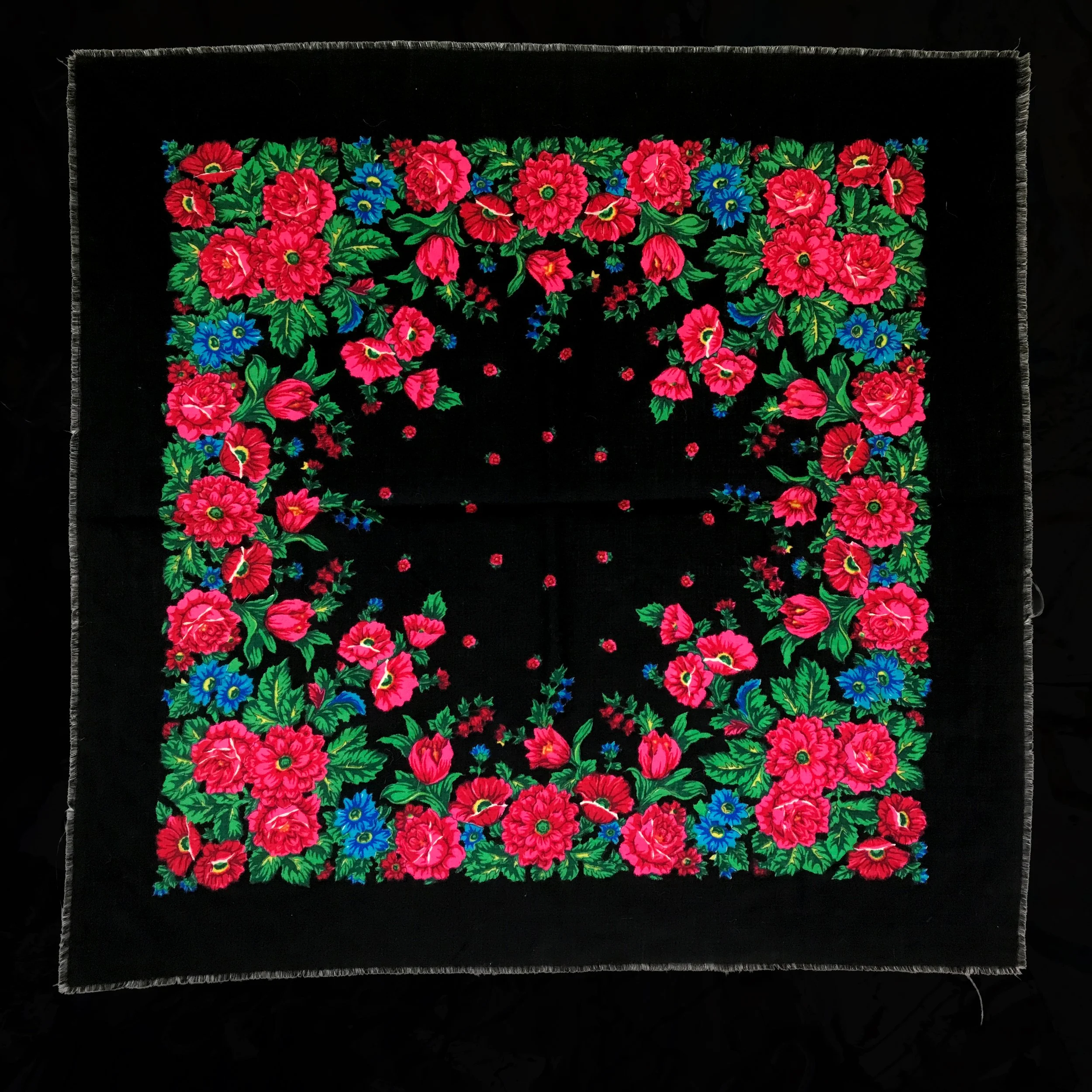
Drawing on the traditional Ukrainian headscarf, the khoustka, the artists explore its affective and symbolic dimensions through an assemblage of texts, personal narratives, and sonic compositions. Both an everyday object and a marker of belonging, the khoustka becomes here a point of entry into questions of transmission, attachment, and the movement of memory.
Over the course of the performance, the object is transformed into a space of relation—a site where gestures, stories, and identities intersect. By activating this material charged with history, the artists open a reflection on the circulation of cultures and on the ways they move, transform, and reinvent themselves across time and contexts, through encounters with others.
OPEN BAR.
Artists
Eugénia Reznik
Eugénia Reznik is a Ukrainian-French-Canadian artist. Working within a research-creation approach, she brings together sociological perspectives with performative and documentary practices, digital arts, and botanical research. Her work explores issues of uprooting, the transmission of memory, as well as the connections between the migration of plants and humans. A recipient of several grants, she has presented her work in numerous exhibitions and events across Canada, Europe, and the United States.
Alexey Reznik
Alexey Reznik is a multidisciplinary artist born in Ukraine and based in Toronto. His practice operates at the intersection of visual art and music, exploring human relationships and lived experiences in contexts of conflict. His work examines dynamics of displacement, fragmentation, and division—both historical and contemporary. An oud player, he regularly performs with his group Maayan Band, weaving musical traditions with contemporary influences. He is also engaged in international and interdisciplinary collaborations that create sensitive connections between sound, memory, and place.
-
VISITE GUIDÉE DE ROSEMONT MONTRÉAL UKRAINIEN 1 AVEC GALYNA LYKHOSHVA
GUIDED TOUR OF ROSEMONT WITH GALYNA LYKHOSHVA
UKRAINIAN MONTREAL Guided Tour Part I)
Meeting point: Ukraine ParkRue de Bellechasse, Tiohtiá:ke / Montreal
Free admission with reservation : info.spheresartinternational@gmail.com
Since 2022, cultural guide Galyna Lykhoshva has been actively supporting newly arrived people in Canada while leading guided tours through the neighbourhoods of Tiohtiá:ke / Montreal. Through her walks and extensive archival research, she has patiently woven together a rich constellation of stories and knowledge, bringing to light the essential role of Ukrainian communities—and particularly that of women—in the making of Montreal. Her tours invite us to discover the often discreet yet deeply rooted presence of Ukrainian communities in the city, both past and present.
What remains of these histories in the streets we walk today? What signs, memories, and traces still endure? Galyna Lykhoshva guides participants through these layered narratives, revealing fragments of memory in the turn of a street or the details of a façade.
The tour will conclude at a multi-generational Ukrainian grocery store, where participants will be invited to sample a selection of Ukrainian specialties.
-
PERFORMANCES IN MILE END
Featuring Nikolay Karabinovych and the Stozhary Theatre,
Adam Kinner and ensemble:
Philippe Lauzier, Frédérique Roy, Stefan Schneider, and Eliana Zimmerman
Ukrainian National Federation of Quebec
405 Fairmount Avenue West, Tiohtiá:ke / MontrealTickets available online through the Federation’s website or at the door.
Shifting Spheres and Returns invites audiences to an evening of performances followed by a reception at the Ukrainian National Federation of Quebec, located in the heart of Mile End. In this site of profound symbolic significance for both the neighbourhood and Montreal’s Ukrainian communities, artists Adam Kinner and Nikolay Karabinovych—the latter in dialogue with the Stozhary Theatre Ensemble, emerging from Montreal’s Ukrainian community—will present new works conceived specifically for SPHERE(S).
Où il nous soit possible d’être uh vraiment chez nous. With this new performance, Adam Kinner draws on the voices of six immigrant French-language learners reading an excerpt from Option Québec by René Lévesque, published in 1967. Through their hesitant pronunciations of this foundational text of Quebec nationalism, language emerges as a terrain through which people seek to belong to a place. These vocal recordings were first presented in 2018 at Artexte, where each was meticulously transcribed into musical notation and presented as audio tracks.
At the Ukrainian National Federation, these recordings will be reinterpreted by an ensemble composed of Philippe Lauzier (bass clarinet), Frédérique Roy (accordion), Stefan Schneider (percussion), Eliana Zimmerman (cello), alongside Adam Kinner himself, transforming hesitant spoken French into a newly conceived musical work. Where It May Be Possible for Us to Uh Truly Be at Home invites close listening while posing a series of questions: How can language initially function as a mechanism of exclusion, while simultaneously producing profound subjective transformations and, over time, generating feelings of belonging? How are questions of welcome, hospitality, and commonality negotiated here?
Adam Kinner
Adam Kinner is an artist based in Tiohtiá:ke / Montreal, originally from Washington, D.C. He develops a transdisciplinary practice grounded in research, improvisation, and collaboration, often working alongside artists from dance and music. His work takes the form of concerts, writing, exhibitions, stage works, films, and site-specific performances. MANUAL, a performance created with Christopher Willes, has been presented across Canada and internationally, including in Japan, the United Kingdom, Finland, Norway, and Thailand. Together with Jacob Wren, he co-directs the orchestra The Air Contains Honey.
The First Decolonial Detective Agency (working title). This opera-performance by Ukrainian artist Nikolay Karabinovych, developed during his residency in Tiohtiá:ke / Montreal, is created in close collaboration with the community gathered around the Ukrainian National Federation and its theatre troupe, Stozhary Theatre. Yuriy Gurzhy, a Ukrainian composer whose work bridges traditional Ukrainian musical forms and contemporary composition—and a long-time collaborator of Karabinovych—composes the score for the work, while Victor Kyrychok performs live accordion.
On the Federation’s main stage, Karabinovych presents a theatrical and musical work infused with dark humour, where personal migration stories, collective memory, and speculative fiction intertwine.
Set in a semi-real, semi-imagined world—uncannily close to our own, yet one in which the Soviet Union never collapsed—diasporic communities once again confront multiple forms of external threat. By questioning how memory is recorded, transmitted, and reenacted, Karabinovych’s work stages an act of remembering through a form that borders on the absurd, while raising questions about how histories are told—and by whom. The sonic journey accompanying the performance traverses time, bringing audiences back to the heart of Montreal’s Ukrainian community history.
Artists
Nikolay Karabinovych, an artist originally from Odesa, Ukraine, works across video, performance, sound, and sculpture. His practice explores the histories of Eastern Europe through personal narratives, addressing questions of identity, belonging, and exclusion, often using music as a cultural lens. A graduate of HISK in Ghent (2020), he served as assistant curator of the 5th Odesa Biennale and is the recipient of the PinchukArtCentre Prize (2018, 2020, 2022). His work has been widely presented internationally and featured in major biennials, including Kyiv, Kaunas, Venice (parallel programme), and Steirischer Herbst.
Stozhary Theatre
Stozhary Theatre is a community-based amateur theatre ensemble active within the Ukrainian National Federation of Quebec in Tiohtiá:ke / Montreal and composed of members of the Ukrainian community. Drawing inspiration from both Ukrainian classics and contemporary dramaturgies, the collective has staged works by Gogol, I. Nechouï-Levytsky, Olga Onyshchenko, and Eugene Polozhiy. To date, Stozhary productions have been presented in Tiohtiá:ke / Montreal, Toronto, and Ottawa.
Socially engaged, the ensemble also supports community and charitable initiatives, notably through its “Adaptation” workshop program, launched following Russia’s full-scale invasion of Ukraine in 2022.
-
SPHERE(S) Lab discussion sessions, a screening of a film by Alisi Telengut, and an Adam Kinner workshop centred on a work by Michael Snow
PHI Foundation, Space 4
407 Saint-Pierre Street, Tiohtiá:ke / MontrealReserve through the PHI website
SPHERE(S) Mile End / With Ukraine: Shifting Spheres and Returns continues at PHI in Old Montreal. The day of June 13 will feature two SPHERE(S) Lab discussion sessions in an agora-style format, a screening of an animated film by Alisi Telengut, and a workshop led by Adam Kinner, joined by other artists, centred on a historical work by Michael Snow. An open bar will conclude the day.
Day 2
1:30 PM | Welcome
Chantal Pontbriand and Sasha Baydal
1:45 PM | Prelude: Céline Galipeau
2:15 pm Laboratory I : Infrastructures of Displacement: Forms of Resistance, Persistence of Memory, and Language
The animated film Baigal Nuur – Lake Baikal (2023) by artist Alisi Telengut will be screened following the discussion.
With : Vincent E., Jonathan Durand, Daria Hetmanova, and Alisi Telengut
3:30 pm Break
4:00 pm Laboratory II :Returns: Circulation and Transformation of Cultural Forms
The notion of return: How do cultural forms circulate through heritage, nationalist, and institutional infrastructures? How do gestures of return transform both the forms themselves and the structures into which they are reintegrated?
With: Dominic Marion, Adam Kinner, Eugénia Reznik, Alisi Telengut, and Alexandra Tsay
5:15 pm Break
5:30 pm Around SINOMS by Michael Snow
This collaborative session led by artist Adam Kinner extends reflections on circulation, transformation, and return through language, using Michael Snow's SINOMS (1989), a landmark work of Canadian art which is based on the list of the names of the mayors of Quebec City, as a starting point. An unsolicited sequel of the work, with contributions from artists Lisa Conway-Bühler and Aman Sandhu, will conclude the day. (As an improvisational jazz musician, Snow would have been delighted.) Lisa Conway-Bühler is a Swiss-Canadian composer, sound artist, songwriter, researcher, recordist, and mixer. Her recordings and sound installations make use of analog synthesizers, drum machines, and electronics, often alongside arrangements for strings and woodwinds. Aman Sandhu is an artist and writer working between Montreal and Glasgow. His installations often include drawing, moving image, sculpture, and text. He considers them as ensembles of objects that come into view through improvisation.
We would like to thank Peggy Gale for her permission to present an excerpt of the original work.
OPEN BAR
Artists
Alisi Telengut
Alisi Telengut is a Canadian artist of Mongolian origin whose practice centres on frame-by-frame animation created under the camera using mixed-media techniques. Her work explores painterly and craft-based aesthetics, as well as relationships between humans and the natural world. Her films have been presented internationally, including at Sundance, the Whitney Biennial, TIFF (Toronto International Film Festival), and Annecy International Animation Film Festival. Nominated for the Canadian Screen Awards and recipient of an Iris Prize, her films have received numerous international distinctions. She is currently an Assistant Professor of Animation at Concordia University.Adam Kinner
Adam Kinner is an artist based in Tiohtiá:ke / Montreal, originally from Washington, D.C. He develops a transdisciplinary practice grounded in research, improvisation, and collaboration, often working alongside artists from dance and music. His work takes the form of concerts, writing, exhibitions, stage works, films, and site-specific performances. MANUAL, a performance created with Christopher Willes, has been presented across Canada and internationally, including in Japan, the United Kingdom, Finland, Norway, and Thailand. Together with Jacob Wren, he co-directs the orchestra The Air Contains Honey. -
GUIDED TOUR OF ROSEMONT WITH GALYNA LYKHOSHVA
UKRAINIAN MONTREAL Guided Tour Part 2
Meeting point: Ukrainian National Federation of Quebec
405 Fairmount Avenue West, Tiohtiá:ke / MontrealFree admission with reservation : info.spheresartinternational@gmail.com
Since 2022, cultural guide Galyna Lykhoshva has been actively supporting newly arrived people in Canada while leading guided tours through the neighbourhoods of Tiohtiá:ke / Montreal.
The tour will concentrate on the Ukrainian presence in Mile End, remembering the arrival of Ukrainians here starting in the XIXth C. The visit will end at the Ukrainian Federation on Fairmount…

Bios
-
![]()
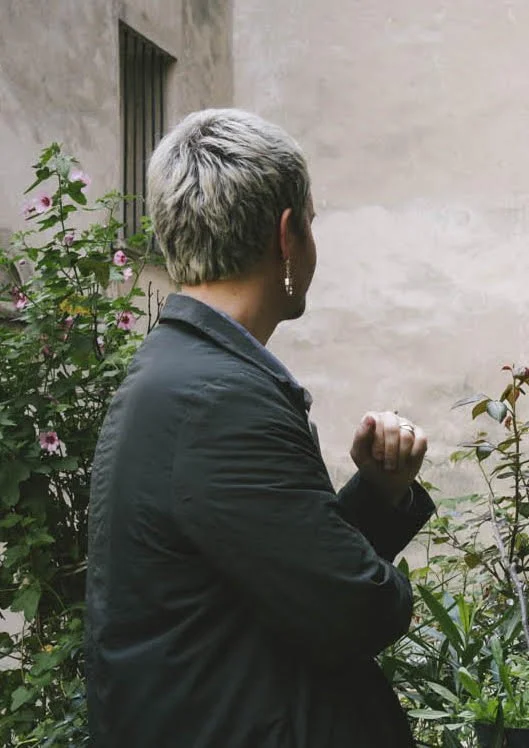
Sasha Baydal
Curator of Shifting Spheres and Returns
Sasha Baydal (all pronouns) identifies as an interdependent art worker and an Eastern European kvir person. Their practice as a researcher and curator focuses on experiences of displacement and diasporization, cultural memory and memory loss, while also drawing from a family history shaped by multiple forms of mobility. Their work is informed by postcolonial and queer theory, as well as decolonial approaches, and involves ongoing practices of recollection, rememorization, and decolonization.Sasha Baydal has collaborated with institutions including the Centre Pompidou as part of the Festival Extra! (2022); the Palais de Tokyo, the Contemporary Art Centre Vilnius, and Kadist for the project Borders Are Nocturnal Animals / Sienos yra naktiniai gyvūnai (2024–2025); the Cité internationale des arts in Paris; HISK in Ghent; Mudam in Luxembourg; Triangle-Astérides in Marseille; the CAPC Musée d’art contemporain de Bordeaux; the Lviv Municipal Art Center in Ukraine; the National Museum of Art of Moldova in Chișinău; Pickle Bar by Slavs and Tatars in Berlin; Imalathane in Bursa/Istanbul; and Künstler*innenhaus Büchsenhausen in Innsbruck, among others. Their work spans exhibitions, conferences, workshops, public programs, performances, and writing.
In 2021, they co-founded Beyond the post-soviet (Btps), a collective dedicated to producing and sharing critical knowledge on cultural and geographic regions formerly designated as “post-Soviet” and “post-socialist.”
Recent activities include the co-curation of the travelling exhibition Displacements and Torrents – Where the Dnipro and the Elbe Meet (2024–2025); participation in After the End. The Forum on Imagining with Others at the Palais de Tokyo in 2025; a residency at Secant Space in Istanbul in spring 2025; and a residency in Moldova at the invitation of the NGO Art Platforma in spring 2026. In 2026, they co-edited the publication Beyond the Post-Reader. Reader 1: Displaced Heritage. Beginning in July 2026, they will be Curator-in-Residence at Villa Kujoyama in Kyoto, Japan.
-
![]()
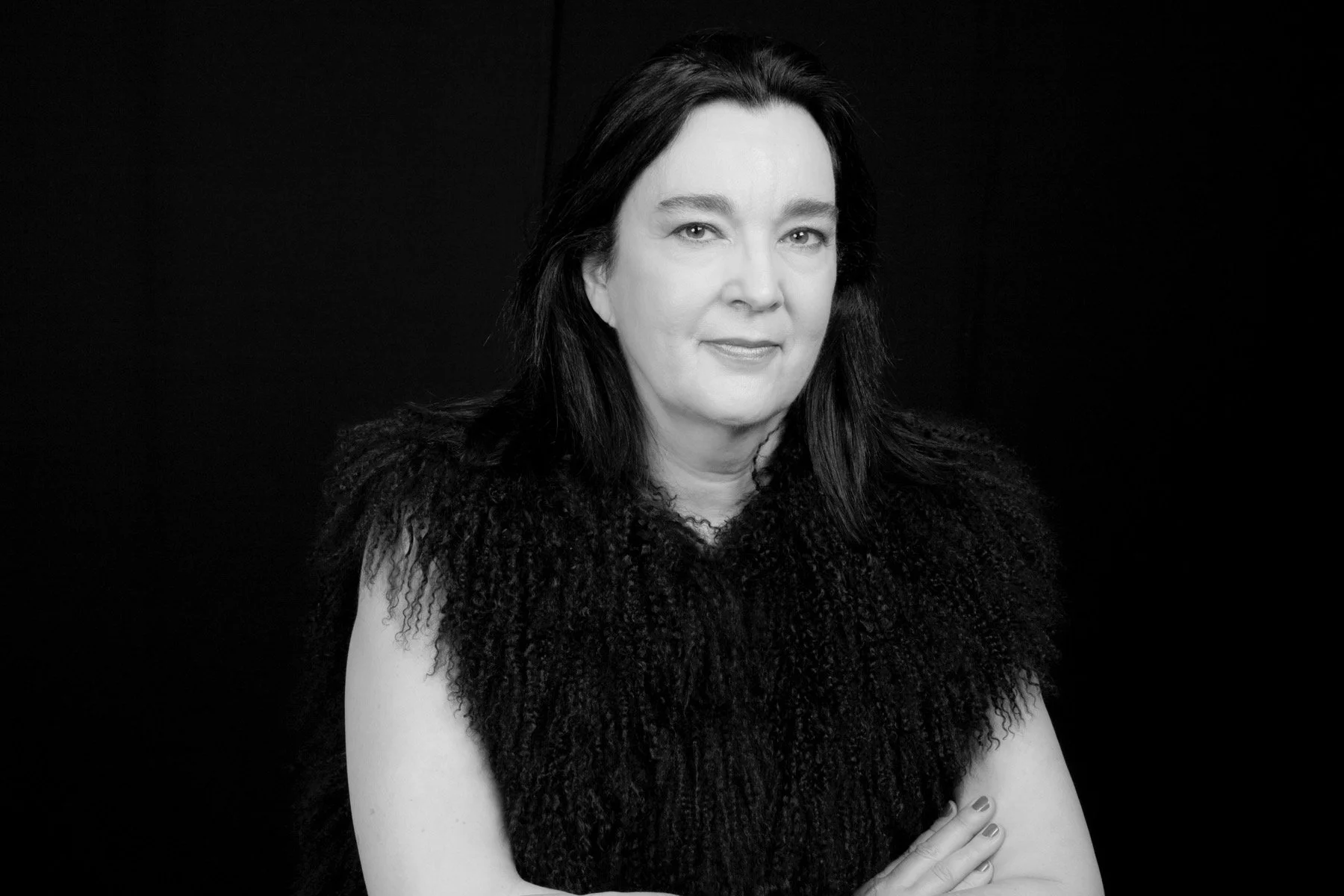
Chantal Pontbriand
Artistic Director of SPHERE(S) Mile End / With Ukraine and Founding Director of SPHERE(S)
Chantal Pontbriand is a strategic planning consultant, curator of exhibitions and events, museologist, and essayist specializing in contemporary art. Her work explores the challenges of globalization, cultural and artistic heterogeneity, and new curatorial and discursive forms. Founder of the journal PARACHUTE in Montreal (1975–2007), she left a lasting mark on the international art scene through the direction of 125 issues that helped shape critical discourse in contemporary art. She is also the founder of FIND – Festival international de nouvelle danse in Montreal (1985–2003). She has published more than twenty books internationally, including anthologies of her essays, collected writings, and exhibition catalogues.She has conceived numerous events, exhibitions, and festivals around the world, spanning photography, video, performance, dance, and multimedia installation. She was co-curator of Pluralities, the exhibition commemorating the centenary of the National Gallery of Canada in 1980, and curator of the Canada Pavilion at the Venice Biennale in 1990 with Geneviève Cadieux. Beginning in 2004, she relocated to Europe, where she developed numerous projects with major institutions and, in 2010–2011, served as Head of Exhibition Research and Development at Tate Modern in London—a position created specifically to envision the museum of the twenty-first century. Upon returning to Canada, in 2015–2016, she was invited to establish MOCA Toronto as its first Executive and Artistic Director.
Recipient of the Governor General’s Award of Canada, Officer of the Order of Arts and Letters in France, and an Honorary Doctorate from Concordia University, she has served as Associate Professor at the Sorbonne / Paris IV and Sorbonne Abu Dhabi, while also teaching at universities across Canada. She has served as President of AICA-Canada, a board member of AICA International and IKT (International Association of Curators of Contemporary Art), and continues her research and projects through Pontbriand W.O.R.K.S. [We_Others and myself_Research_Knowledge_Systems], a platform bringing together her curatorial, critical, and strategic activities.
Today, she is developing SPHERE(S), a new type of international contemporary art event, while completing a book entitled EXIL[E], Aesthetics and Migration.
Image: Chantal Pontbriand. Photo: Richard-Max Tremblay. Courtesy of Chantal Pontbriand and Richard-Max Tremblay.
Discussions Labs
DAY 1
Dominique Arel
Dominique Arel, based in Montreal, is an Associate Professor of Political Science and Chair of Ukrainian Studies at University of Ottawa, where he teaches and conducts research on issues of identity, language, and politics in Eastern Europe. He earned a BA from Université de Montréal, an MA from McGill University, and a PhD from University of Illinois Urbana-Champaign. His research focuses primarily on the formation of national identities in Ukraine and Russia, as well as the political dynamics surrounding post-Soviet transformations. He co-edited the landmark volume Rebounding Identities: The Politics of Identity in Russia and Ukraine (2006), which examines evolving identity formations in these contexts.
Galyna Lykhoshva
Since 2022, cultural guide Galyna Lykhoshva has been actively supporting newly arrived people in Canada while leading guided tours through the neighbourhoods of Tiohtiá:ke / Montreal. Through her walks and extensive archival research, she has patiently woven together a rich constellation of stories and knowledge, bringing to light the essential role of Ukrainian communities—and particularly that of women—in the making of Montreal. Her tours invite us to discover the often discreet yet deeply rooted presence of Ukrainian communities in the city, both past and present.
James Oscar
James Oscar is a writer, art critic, and curator whose work merges experimental art criticism, innovative curation, and cultural anthropology. A graduate researcher at the Institut National de la Recherche Scientifique, he specializes in the sociology and anthropology of art and in cultural policy. His approach was profoundly shaped by mentorship under Martinican philosopher Édouard Glissant. With 25 years in contemporary art writing, he is the recipient of the Joan Yvonne Lowndes Award from the Canada Council for the Arts.
Jacqueline Hoàng Nguyễn
Jacqueline Hoàng Nguyễn, Montréal-Ho Chi Minh, has a research-based practice investigates archives, state spectacle, photography, feminist theory, and utopian politics. Her project revisiting Canada’s 1967 Centennial critically examines how multiculturalism was staged as a progressive national mythology, masking colonial continuities and exclusions. Her work resonates strongly with the round table’s aim to interrogate how visual regimes and archival narratives construct collective memory while managing difference.
DAY 2
Céline Galipeau
Céline Galipeau, Montréal, is one of the leading figures in Quebec and Canadian journalism. A journalist, international correspondent, and seasoned broadcaster, she has contributed for several decades to shaping public understanding of major contemporary geopolitical upheavals. Her fieldwork has taken her to the heart of numerous conflicts and crisis zones—from Eastern Europe to the Middle East, including the Balkans, Russia, Afghanistan, and more recently, Ukraine. Her perspective has consistently stood out for its rare ability to articulate the human, political, and historical dimensions of events, giving voice to the lived realities of populations affected by war, displacement, and violence.
Daria Hetmanova
Daria Hetmanova is currently pursuing their PhD at the School of Communication at Simon Fraser University, which is situated on the Traditional Coast Salish Lands including the Tsleil-Waututh (səl̓ilw̓ətaʔɬ), Kwikwetlem (kʷikʷəƛ̓əm), Squamish (Sḵwx̱wú7mesh Úxwumixw) and Musqueam (xʷməθkʷəy̓əm) Nations. Operating at the intersection of STS and critical infrastructure studies, Daria’s current project focuses on mapping—both spatially and temporally— the Russian-established system of “filtration” of Ukrainian civilians during Russia's war against Ukraine.
Adam Kinner
Adam Kinner is an artist based in Tiohtiá:ke / Montreal, originally from Washington, D.C. He develops a transdisciplinary practice grounded in research, improvisation, and collaboration, often working alongside artists from dance and music. His work takes the form of concerts, writing, exhibitions, stage works, films, and site-specific performances. MANUAL, a performance created with Christopher Willes, has been presented across Canada and internationally, including in Japan, the United Kingdom, Finland, Norway, and Thailand. Together with Jacob Wren, he co-directs the orchestra The Air Contains Honey.
Alexandra Tsay
Alexandra Tsay is an independent curator and a PhD candidate in the Interuniversity Doctoral Program in Art History at Concordia University. Her FRQSC-funded doctoral research examines contemporary art in Kazakhstan from the late Soviet to the post-independence period, tracing and theorizing shifts in aesthetic strategies while situating artistic developments within the global context. Alexandra is a co-editor of Stalinism in Kazakhstan: History, Memory, and Representation (2021) and a contributor to The Nazarbayev Generation: Youth in Kazakhstan (2019). Her recent curatorial projects include Suture: Reimagining the Ornament (2023) in Hong Kong and Living Memory in Almaty.
Nikolay Karabinovych
Nikolay Karabinovych, an artist originally from Odesa, Ukraine, works across video, performance, sound, and sculpture. His practice explores the histories of Eastern Europe through personal narratives, addressing questions of identity, belonging, and exclusion, often using music as a cultural lens. A graduate of HISK in Ghent (2020), he served as assistant curator of the 5th Odesa Biennale and is the recipient of the PinchukArtCentre Prize (2018, 2020, 2022). His work has been widely presented internationally and featured in major biennials, including Kyiv, Kaunas, Venice (parallel programme), and Steirischer Herbst.
Anoush Moazzini
Anoush Moazzeni, Montréal and Chertsey, born in Iran, is an interdisciplinary artist, thinker, writer, and educator whose practice lies at the intersection of philosophy, sound, performance, politics, and ethico-aesthetics. Working across experimental art, research-creation, and critical theory, she explores embodiment, affect, migration, memory, and speculative forms of world-building through artistic and relational processes.
Jen Budney
Jen Budney, Saskatoon, is the Executive Director and CEO of the Ukrainian Museum of Canada, as well as a curator, author, cultural leader, and thinker whose work bridges museum practice, public history, and diasporic memory. She advances critical reflections on heritage, migration, identity, and Ukrainian cultural resilience within contemporary civic and international contexts.
Eugénia Reznik
Eugénia Reznik is a Ukrainian-French-Canadian artist. Working within a research-creation approach, she brings together sociological perspectives with performative and documentary practices, digital arts, and botanical research. Her work explores issues of uprooting, the transmission of memory, as well as the connections between the migration of plants and humans. A recipient of several grants, she has presented her work in numerous exhibitions and events across Canada, Europe, and the United States.
Vincent E.
Vincent E. writes, curates, teaches, moderates, organizes, dreams, and plots. They live as an uninvited settler in Katarokwi (Kingston), on land stolen from the Anishinaabek, Haudenosaunee, and Huron-Wendat peoples. In their doctoral research at the Department of Film and Media at Queen’s University they examine the Cold War-era nuclear optimism from a decolonial perspective, focusing on the ways how Soviet nuclear colonialism was made legible through the forms of international communication.
Alisi Telengut
Alisi Telengut is a Canadian artist of Mongolian origin whose practice centres on frame-by-frame animation created under the camera using mixed-media techniques. Her work explores painterly and craft-based aesthetics, as well as relationships between humans and the natural world. Her films have been presented internationally, including at Sundance, the Whitney Biennial, TIFF (Toronto International Film Festival), and Annecy International Animation Film Festival. Nominated for the Canadian Screen Awards and recipient of an Iris Prize, her films have received numerous
Marko Kolomytskyi
Marko Kolomytskyi’s trajectory has been shaped by multiple displacements: first, a childhood in Ukraine’s Donbas region marked by the Russian occupation since 2014, and later a life of migration, from Donbas to Asia and Japan, then to Canada, before a recent move to Paris. His artistic practice revolves around language, which he considers his primary medium, and unfolds through installation, printmaking (lithography and linocut), performance, theatre, and film. Drawing on conceptual approaches as well as the philosophies of Cosmism, his work reactivates these legacies through the lens of the contemporary moment, while placing questions of sensitivity, fragility, and tenderness at the center.

Mélanie Leavitt
Mélanie Leavitt, Montréal, active with the Société d’histoire Mémoire du Mile End, offers a localized reading of colonial frameworks as they materialize in urban space. The Mile End neighborhood—shaped by railway corridors, factories, zoning regimes, and waves of migration—embodies how transport infrastructures and immigration policies reshape both territory and community.
Lidia Zhigunova
Lidia Zhigunova, New Orleans, is a professor at Tulane University, a writer, and an Indigenous Circassian thinker. She works on the notion of transnational Indigeneity—a way of understanding belonging beyond the borders drawn by empires and modern states. For Circassian communities dispersed by imperial violence, Indigeneity is not limited to territorial continuity; it is sustained through language, memory, kinship, and cultural practices. Here, resilience becomes a political and epistemic practice: keeping the homeland alive in exile without essentializing or fixing it.
David Garneau
David Garneau, Edmonton, of Métis origin, writes and curates exhibitions on contemporary Indigenous art, settler colonialism, and what he describes as “Indigenous refusal.” His work emphasizes sovereignty beyond frameworks of reconciliation that leave colonial structures intact. In this roundtable, Garneau’s voice recenters Indigenous epistemologies and challenges both migrants and settlers to engage with treaties, land, and responsibility beyond symbolic inclusion.
Alexey Reznik
Alexey Reznik is a multidisciplinary artist born in Ukraine and based in Toronto. His practice operates at the intersection of visual art and music, exploring human relationships and lived experiences in contexts of conflict. His work examines dynamics of displacement, fragmentation, and division—both historical and contemporary. An oud player, he regularly performs with his group Maayan Band, weaving musical traditions with contemporary influences. He is also engaged in international and interdisciplinary collaborations that create sensitive connections between sound, memory, and place.
Jonathan Durand
Jonathan Kolodziej Durand is a Montreal photographer and filmmaker focusing on erasure and oral history. His 2019 documentary, Memory Is Our Homeland (Al Jazeera Witness), documents Polish WWII deportees to Siberia who became refugees in East Africa, and whose history was erased after the war. Driven by this legacy, he has volunteered and filmed in Ukraine with humanitarian groups since 2022, intending to release his next film, The Paradox of Motion, in 2027.
Dominic Marion
Author of a dissertation on the reception of Marquis de Sade (Sade et ses lecteurs. Une historiographie critique [XVIIIe-XXIe siècle], Hermann, 2017), Dominic Marion also edited the illustrated book-record Ouverture du cadavre de Sade (Possibles Éditions/Tour de Bras, 2016) and the collective volume Logiques de la transgression. Hubert Aquin et Georges Bataille (Otrante, 2025). He teaches literature, theatre, and Québécois cultural studies at the Université de Montréal. A guitarist, improviser, and composer, he also creates original music through projects such as Totenbaum Träger, Marion/Mucci, and Maquereau Dose.
Eugénia Reznik
Eugénia Reznik is a Ukrainian-French-Canadian artist. Working within a research-creation approach, she brings together sociological perspectives with performative and documentary practices, digital arts, and botanical research.